
Thrifting for Canning Jars: What to Look for (and Avoid)
When you have been canning for as long as I have, and like my mom has canned for more than 45 years, it gets easier to spot a good canning jar when thrift store shopping or browsing garage and rummage sales. But if you’re new to home food preservation, it may be harder to know whether a mason jar is actually worth bringing home.

I am writing this post to help you decide if the glass jars you find at the thrift store are good for pressure canning, water bath canning, or better suited for storage, crafts, or decorative use.
Why Thrifting for Canning Jars Makes Sense on a Homestead
When I first started canning my garden produce and making jellies and jams, I didn’t have many jars or much money for that matter. We were newly married, had a baby, and my husband had just started farming with his dad. Money was tight, and I was a stay-at-home mom during that season of life.
We have since become more stable financially, but I still like saving money. Thrift store shopping has always been a hobby of mine, ever since I was a young kid going with my mom. It was something I looked forward to and really enjoyed.
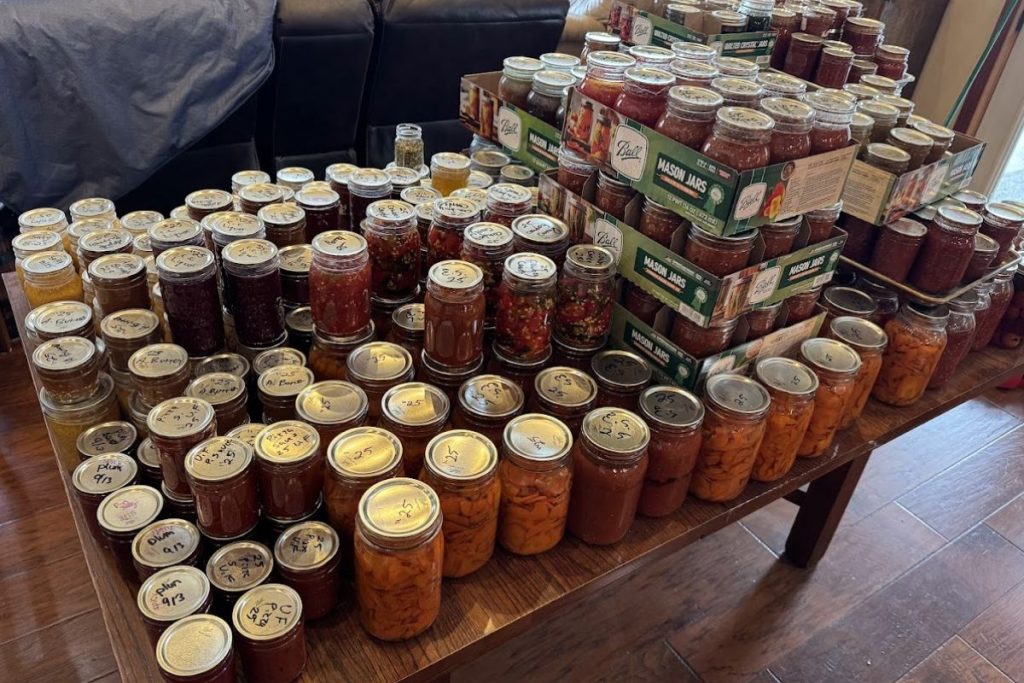
There are a few things I always keep an eye out for when thrift-store shopping and at garage sales. Used canning jars and antiques for decor are always at the top of my list, along with whatever other treasures I happen to find.
Almost my entire stock of canning jars is made up of secondhand jars passed down from my mom, other canners, or found at thrift stores over the years.
Are Thrift Store Canning Jars Safe to Use
Almost all my canning jars have been passed down from other canners or found secondhand. In many cases, thrifted jars are still perfectly useful. You just need to pay close attention to the condition of the glass, the rims, and any signs of damage before using them for canning.
What the experts recommend for safe home canning
The best jars for home canning are mason-style jars made for canning, with thick glass and threaded mouths for two-piece lids. These jars are designed to handle repeated heating and cooling.
For pressure canning, especially, I prefer sturdy canning jars in standard sizes and in good condition. Water bath canning can be a little more forgiving, but I still inspect every jar carefully before using it.

Why secondhand jars are a good option
Thrifted canning jars are a great option because many of them are still in almost new condition. Sometimes they came from a canner who retired from canning, passed jars down to family, or gifted canned goods to people who never returned the jars. That makes secondhand jars a practical and affordable alternative to buying new ones.
When a thrifted jar is better used for storage instead
Some glass jars you find at thrift stores are better suited for decor, storage, or crafts because of blemishes or imperfections in the glass. A jar does not have to be good enough for canning to still be useful around the homestead. Below, I go into detail on what to look for when thrift store shopping for used canning jars.
What to Look for When Thrifting Canning Jars
Here are a few important details to look for when thrifting canning jars. If you’re just looking for mason jars for crafts or decor, you do not need to be quite as picky. But if you want to use thrifted canning jars for pressure canning or water bath canning, you need to inspect them closely.
Check the rim for chips and rough spots
The first place I check on any canning jar is the rim. This affects whether your canning lids will seal properly. A rim that is chipped, cracked, or uneven may never seal correctly.

If there are cracks, those jars are best used for mason jar crafts, flower vases, or decor. If the rims are slightly uneven or have blemishes but no cracks, I would reserve them for dry storage, leftovers, or fermented foods that are not being heat-processed for shelf storage.
Look for cracks in the glass
Any crack in the glass is a deal breaker for canning. Once heat is applied, that jar could break and make a mess in your canner or kettle.

Check for scratches and cloudy glass
Light wear on an older jar is not always a problem, but deep scratches can weaken the glass and create a weak spot. That may increase the chance of breakage during canning.
Cloudy glass concerns me less because mineral buildup can often be cleaned off. A soak in lemon juice or citric acid usually helps a lot. However, if a truly old jar stays cloudy even after cleaning, the glass may simply be worn with age.
Make sure it is a real canning jar
This is where glass thickness and branding matter. True canning jars are usually made with thicker glass and are often molded with a company name, logo, or identifying marks. Some jars may also have decorative patterns molded into the glass.

Look for matching sizes and common jar shapes
There is nothing worse than getting home and realizing you bought a bunch of mismatched jars in odd sizes. For pressure canning, I like to keep my jars mostly in pints and quarts, preferably in similar sizes, so I can load my pressure canner easily.
For jellies, jams, sauces, or fermented foods like sauerkraut, I care less about matching sizes. A mix of shapes can actually add a little charm to a homestead pantry.
Watch for trusted canning jar brands
Ball, Kerr, Atlas, Improved Gem, and Weck are all well-known names you may come across. If you find a Weck jar at a thrift store, that is usually a great find, since they are expensive brand new.
Canning Jars to Avoid at the Thrift Store
Here is a list of jars to avoid when thrifting if you plan to use them for home canning.

Avoid jars with chipped rims
Even a small chip on the rim can keep a lid from sealing properly. That alone is enough for me to leave a jar behind. Unless it’s a rare vintage jar, I will use it for decor.
Skip jars with cracks or deep scratches
Any visible crack is a hard no for canning. Deep scratches can also weaken the glass and make the jar more likely to fail under heat.
Be careful with decorative jars
Decorative jars may look pretty, but that does not mean they were made for canning. Many are better suited for centerpieces, pantry decor, craft storage, or seasonal displays.

Avoid commercial food jars
I do not recommend reusing jars from commercial food products for pressure canning. Most were not made for repeated home canning use, and many do not work with standard two-piece canning lids.
Pass on jars with heavy staining or mystery residue
Some staining can be cleaned off, but if a jar has a heavy film, odd smell, or mystery residue that makes you question where it came from, it is probably best to leave it behind.
Are Vintage Mason Jars Safe for Canning?
Sometimes yes, sometimes no. It depends on how old the jar is, what shape it is in, and whether it was truly made for canning. Personally, I think truly vintage and antique canning jars are often best used for decorative purposes.
Fill them with buttons, seashells, or dried flowers. Put them on display. Preserve them for future generations or resell them to collectors.
Check out this website if you love vintage jars or would like to know what to look for when thrifting.

When old jars are still usable
There are some older jars that may still be usable for canning if the glass is free of chips, cracks, and deep scratches. They should also have a proper screw band fit and be compatible with standard canning lids. Use your best judgment here, and when in doubt, use them for storage instead.

When vintage jars are better for decor or dry storage
I personally believe the truly beautiful vintage jars are better saved for display, decor, or dry storage. There are only so many left in the world, and they are not making those jars again.
Why age is not the only thing that matters
A jar is not automatically unsafe just because it is older, and it is not automatically safe just because it looks nice. Condition matters more than appearance. Always inspect the rim, body, and overall sturdiness of the jar before deciding how to use it.
Don’t Forget to Check the Rings and Lids
I do not buy used canning lids for shelf-stable canning. There are many canners who reuse their lids, but I prefer to use new flat lids when I am actually canning food for the pantry. I do reuse lids for fermented foods or for leftover food storage in the fridge.
Used canning rings are often fine to keep, as long as they are still round, screw on properly, and are not heavily rusted or bent.

What to avoid when buying used rings and lids
If you are okay with reusing lids for non-canning purposes, look for lids with no dents, no rust, and no acid marks on the top, which are often caused by acidic foods like tomatoes.
For canning rings, avoid ones with large dents, heavy rust, or warped shapes. If they no longer screw on smoothly, they can interfere with getting a good seal during processing.
How to Clean and Prep Thrifted Canning Jars
Wash every jar well before using it
Hot soapy water or a trip through the dishwasher will usually get a thrifted jar clean enough for inspection and prep.
Inspect each jar again after washing
Always inspect the jars again after washing. Sometimes you notice flaws more easily once the dirt, dust, and residue are gone. It is also a good time to make sure nothing got chipped on the way home.
How to remove hard water stains and film
Many canners, including me, live in rural areas where well water is high in minerals, and that can leave a cloudy film on jars and glass. One of the easiest ways to remove this buildup is with citric acid, vinegar or straight lemon juice. A quick soak and a good scrub will often clean them right up.

When a Cheap Jar Is Not a Good Deal
Sometimes you may find a shelf full of great canning jars, but they are priced a little high for secondhand items. I usually pass on those unless they have resale value because they are rare or vintage.
Before buying thrifted jars.
Compare the price to buying new
If the thrift store price is too close to the cost of brand-new jars, the deal may not be worth it.

Think about the condition before you buy
A cheap jar is not really cheap if it has flaws that make it unusable for canning.
When it makes more sense to leave them behind
Sometimes I leave them behind because of the price, the condition, or simply because they are not what I want to store in my canning room. That is okay too. You do not have to buy every jar you come upon. Remember, there is always someone else who may find them useful.
FAQs About Thrifting for Canning Jars
Can you use thrift store jars for canning?
Some thrift store jars can be used for canning if they are true canning jars and are still in good condition. Always inspect the rims, the glass, and the overall sturdiness of the jar before using it.
Are old Mason jars safe for canning?
Some older Mason jars may still be safe for canning if they are free of damage and fit standard canning lids properly. I use many older jars myself, but I still inspect every one before using it.
Can you use vintage jars for pressure canning?
I personally think beautiful vintage jars are best used for decor only. They are unique, collectible, and may have older glass that has become more fragile over time. Because of that, I would not choose true vintage jars for pressure canning.
Can you reuse lids that come with thrifted jars?
I usually do not. I have reused my own lids before, but I also knew their age and how many times they had been used. If thrifted lids are unopened and still in their original packaging, I would feel more comfortable keeping them.
Are rusty canning rings still safe to use?
Light rust on a ring is one thing, but if a ring is heavily rusted, bent, or no longer screws on properly, I toss it. Rings are meant to be removed after canning anyway. You should not store jars with the rings on, since trapped moisture can lead to rust and lid corrosion over time.
Can you use spaghetti sauce jars for canning?
No, I would not recommend reusing commercial food jars for pressure canning. Commercial jars are not usually built to handle repeated home canning use. I would rather use these jars for refrigerator pickles, sauerkraut, brined foods, leftovers, or dry storage.
How do you know if a jar is a real canning jar?
Canning jars are usually molded or stamped with a company name, logo, or identifying mark somewhere on the glass. Some older jars may only have numbers or markings on the bottom, while others have brand names near the top or center.

What can you do with jars that are not safe for canning?
Jars that are not safe for canning can still be used for mason jar crafts, flower vases, pantry storage, leftovers, and decor. If they are rare vintage jars, I would use them for display. I also love using extra jars around the house because they are an eco-friendly way to cut down on plastic.
Building a Budget-Friendly Canning Collection
Building a canning jar collection does not have to happen all at once, and it does not have to be expensive. Some of the best jars in my canning room came from thrift stores, garage sales, or family members who no longer canned.
The key is knowing what to look for, what to avoid, and when to leave a jar behind. If you thrift with a careful eye, you can slowly build a budget-friendly canning collection that serves your homestead well for years to come.
Here are some related posts to budget-friendly canning.
