Are Chickens Omnivores? Why Chickens Eat a Certain Diet.

Chickens love meat as much as we do, which makes them omnivores.
Chickens are fascinating creatures that lay incredible eggs. They have a diverse diet and consume plants and small animals, making them natural omnivores.
Have you ever wondered why they eat what they do? In this blog post, I explore why chickens need an omnivorous diet, high protein, and plant matter to stay healthy.
We did not understand our chicken’s nutritional needs when we started our little flock of 20 hens and a few roosters nine years ago.
Not long after our hens matured, we noticed a few of our chickens started plucking and eating feathers off their flock members. No more cute fluffy butts!

Their egg shells were brittle, and the first mottling was horrible on my birds.
Nothing like being naked and afraid! Those poor ladies.
After talking to an experienced chicken owner, I learned quickly that my hens needed better food choices, which included a higher protein diet than they were getting, plus the addition of calcium and oils.
Our chickens needed a balanced diet to maintain good feather health, strong egg shells, and a healthy weight.
I was depriving our chickens of essential nutrients needed to maintain health, AKA fluffy butts.

My Backyard chickens required various grains, seeds, and high protein sources to receive the essential nutrients for their well-being.
If I wanted a great-looking flock, I had to up my feed game and ensure all the ladies were happy and adequately fed.
I had much to learn about feeding my chickens what they required and enjoyed.
The first thing was for me to get familiar with what a healthy chicken requires in their diet.
Chickens Are Omnivores
Omnivores eat plant material and meat. Chickens have survived for decades by scavenging for food.
They were never fed a layers crumble feed mix; they dug for worms and bugs, cleaned dead animal carcasses, and ate plant material and seeds.

These days, we call it free-ranging or foraging. Chickens are in pure heaven when they can dig for bugs, eat garden produce, and enjoy some meat.
Chickens Are Not Vegetarian
Chickens were never meant to be fed a strict vegetarian diet; doing so destroys their natural instincts.
If you’re an experienced chicken owner, you know how excited chickens get when you bring out the table scraps and leftovers.
Now, if there are meat scraps in those leftovers, you will see your chickens grab and run while being chased by other flock members.

This behavior is a natural instinct.
While chickens are on free range, they hunt for small mammals. Meaning they love eating mice, snakes, and frogs.
Scavengers are nature’s natural cleaners, and chickens are one of them.
Grocery stores will advertise vegetarian chickens or eggs from vegetarian-fed hens; this can be misleading.
This is not to say you cannot raise chickens on a strictly vegetarian diet, but this would require restricting them to a dry run and feeding them vegetarian proteins.

Vegetarian fed chickens would be supplemented with soybean meal and other feeds designed by a poultry nutritionist to ensure they get the proper nutrients to thrive on a restricted diet.
It’s easy to say that vegetarian-fed chickens are restricted from their natural environment.
Chickens Require A High-Protein Diet
Chickens require a protein-rich diet for growth, development, and overall health.
Proteins are complete amino acids, the building blocks of chickens’ tissues, muscles, feathers, and organs.
Without an adequate intake of protein, your chickens may experience these negative effects:
- 1. Poor growth: Protein deficiency can lead to stunted growth in your chickens, particularly young birds. This can result in smaller-sized birds that may not reach their full potential in size and weight.
- 2. Reduced egg production: Protein is crucial for egg production in laying hens. A protein deficiency can lead to decreased egg laying in your hens.
- 3. Weakness and susceptibility to diseases: Protein is vital in maintaining your chickens’ immune systems. A lack of protein can weaken their immune response, making them more susceptible to infections and diseases.
- 4. Feather quality: Proteins are essential for forming your chicken feathers. A deficiency can lead to poor feather quality, including dullness, brittleness, and loss. Chickens will even start to eat feathers off other hens.
- 5. Reproductive problems: Protein deficiency can also affect your chickens’ reproductive health, decreasing fertility or hatchability in breeding flocks.

Ensure your chickens have a balanced diet with enough protein to prevent these adverse effects.
Sources Of Protein For Chickens
- Cat food & dog food
- Bone meal
- Raw meat scraps
- Cooked meat scraps (animal products)
- Soybeans
- Beans & peas. (beans need to be cooked)
- Commercial chicken feeds (check the label!)
- Eggs (any frozen eggs, scramble up the eggs and feed to the hens)
- Luxury foods, such as mealworms & dried bugs
My chickens go nuts when we head to do chores; they absolutely love our table scraps.
Our house has a large bucket all leftovers go into, which is a great way to reduce waste!

Table Scraps: You Can Feed Chickens
Here is what we toss in the chicken scrap pail.
- Eggshells & eggs (raw or cooked)
- Food scraps from meals
- Cooked and uncooked meat
- Veggies (all shapes and sizes, cooked and uncooked)
- Leafy greens (want to see a happy chicken? Give them a head of lettuce!)
- Sandwich meat
- Bread, buns, and cereal (stale and moldy, it doesn’t matter)
- Leftover batter from pancakes or breading (flour, egg/milk mixture)
- Cooked potatoes (chickens are not fans of raw potatoes)
- Cooked rice
- Pasta
- Beans, lentils
- Fruit (watermelon is a favorite)
- Fruit peelings, veggie peelings (watermelon rinds)
- Onion scraps & garlic (cooked)
- Herbs (really healthy for your hens!)
- Dairy products, all kinds.
- Nuts- Almonds, cashews, walnuts, peanuts, macadamia, and more
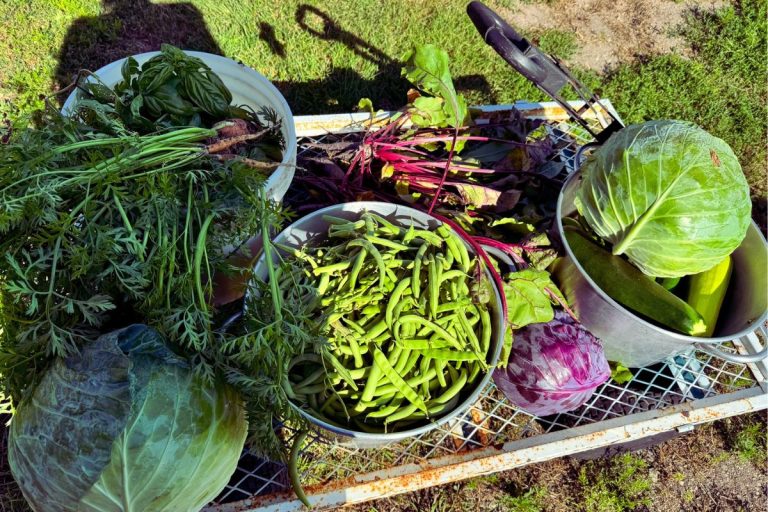
I even toss the weeds (when I weed my garden) into the hens. At the end of the year, they get the remnants of my garden plants to pick clean.

If my husband spills soybeans, wheat, barley, or any other type of grain in the gravel when filling bins, we scoop it up and toss it into the chickens; they love it.
When we mow the lawn and need to rake up clippings, we throw them to the goats and chickens; they go crazy over freshly mowed lawn clippings.
In the fall, we toss leaves into the chicken run and to our Nubian goats, who are major fans of eating leaves. My raspberry patch is living proof of that. There is not much left of it!
Food Chickens Cannot Eat
- Avacado shell (flesh is safe)
- Rhubarb leaves (these are poisonous to all animals)
- Tea or coffee
- Candy and chocolate
- Excessive amounts of apple seeds ( they have arsenic in them, but a chicken would have to eat one pound of just seeds to do any harm.)
- Dry rice (should be cooked; it can expand when dry and harm your chickens)
- Dried beans (have a toxin in them when dry)
Food Chickens Can Have But Won’t Eat
- Raw potatoes (they like these cooked)
- Raw celery ( they prefer these cooked also)
- Onion peelings (dry peeling on the outer part of the onion; I toss them in there anyway, as my hens will scratch and turn them into compost)

What percentage of protein should my chickens be getting?
This depends on the age and type of chicken.

Ensure you properly read the label on your commercial feed.
Even if the bag states the protein content, read the label; there is too much misleading labeling on products.
Different breeds of chickens will require different ratios of feed/protein. Leghorns, for instance, require less feed than other layers, and Rhode Island Reds, Ameraucanas, and Araucanas require a bit more protein.

If you have local feed mills (feed stores, where they custom mix feed), have them mix you a feed that includes all the nutrients needed for your flock.
What I feed my Chickens Now
After learning what my hens needed to keep their fluffy butts, shiny feathers, and proper body weight, we adjusted what we were feeding the flock.
In addition to feeding a fortified Layer Crumble, we feed ground oats (my husband grinds them for the cows), black sunflowers (great for their feathers), mealworms, weeds, grass clippings, oyster shells, grit (fresh gravel), and every food scrap we have from our meals.
Here in North Dakota, we have issues with Webworms killing chokecherry trees and many other trees. If I see a nest of Webworms, I cut off the branch and toss it to the chickens; our hens make quick work of destroying it.

Feeding this varied diet ensures our hens stay healthy and keep their fluffy butts.
Frequently Asked Questions
Are Chickens Scavengers?
Yes, they love to scavenge. You will frequently find chickens scratching in the dirt, woods, and anywhere else they can find food.
If your chickens free-range on your property, they will likely eat small rodents, snakes, frogs, and bugs and clean up dead animal carcasses. Chickens are naturally omnivorous birds, which means they eat plant matter and animal protein. In the wild, chickens are opportunistic feeders.
Will Chickens Eat Meat?
Yes, chickens are known to eat everything, from meat to veggie scraps. They are omnivores and really love meat. As a chicken owner, I feed my hen’s leftover meat and table scraps. It’s an essential part of their diet. They love having the leftovers; it’s like their treat. They see a scrap pail and go crazy.

What Do Chickens Eat That Are Animals?
They will eat dead animals, mice, snakes, frogs, and even small rats—any little rodent they can get. They will eat any meat you give them, that includes beef, all types of poultry, pork, and fish.
Chickens love foraging for bugs and will destroy your garden and flowerbeds while digging for insects.
Are Chickens Meant To Be Vegetarian?
No, they were never meant to eat a vegetarian diet. They need protein in their diet, and their natural instinct is to scavenge and search for protein sources.
Are Chickens Cannibals?
Chickens will naturally pick on other flock members. If one chicken is injured, you must cover the wound as soon as possible, or the other chickens will damage the injured bird more and even kill it. If a chicken happens to die and is not disposed of, the other chickens will eat it. So yes, they will resort to cannibalism if left uncared for or with an injured chicken.

Can Chickens Eat Meat Or Fish?
Yes, they can eat meat of all types and enjoy seafood. In fact, oyster shells are part of a healthy diet, and shrimp shells, fish skin, and scraps are a great snack for chickens.
Will Chickens Eat Dead Rodents?
Chickens will eat anything that contains meat, including dead rodents. If you have rat/mouse poison near your coop and a mouse happens to die in the chicken coop or run, your chickens will eat it and die. So be careful if you have mouse or rat poisoning on your farm or find an alternative way to control the rodents.
Chickens Are Omnivores And Not Herbavores.
I learned, like many others, that chickens need a varied diet. Due to their natural instincts to scavenge and forage, they are happiest and healthiest when they get an omnivore diet high in protein, calcium, oils and other essential nutrients.
You can easily tell if your chickens are healthy by looking at them, if they have fluffy butts and shiny feathers, are active and alert. You have a happy flock.
I hope this blog post was informative and helped you understand a little more about why chickens eat what they do. Remember to drop a comment if I happened to miss any key details or if you have any questions about what to feed your chickens.
~Esther